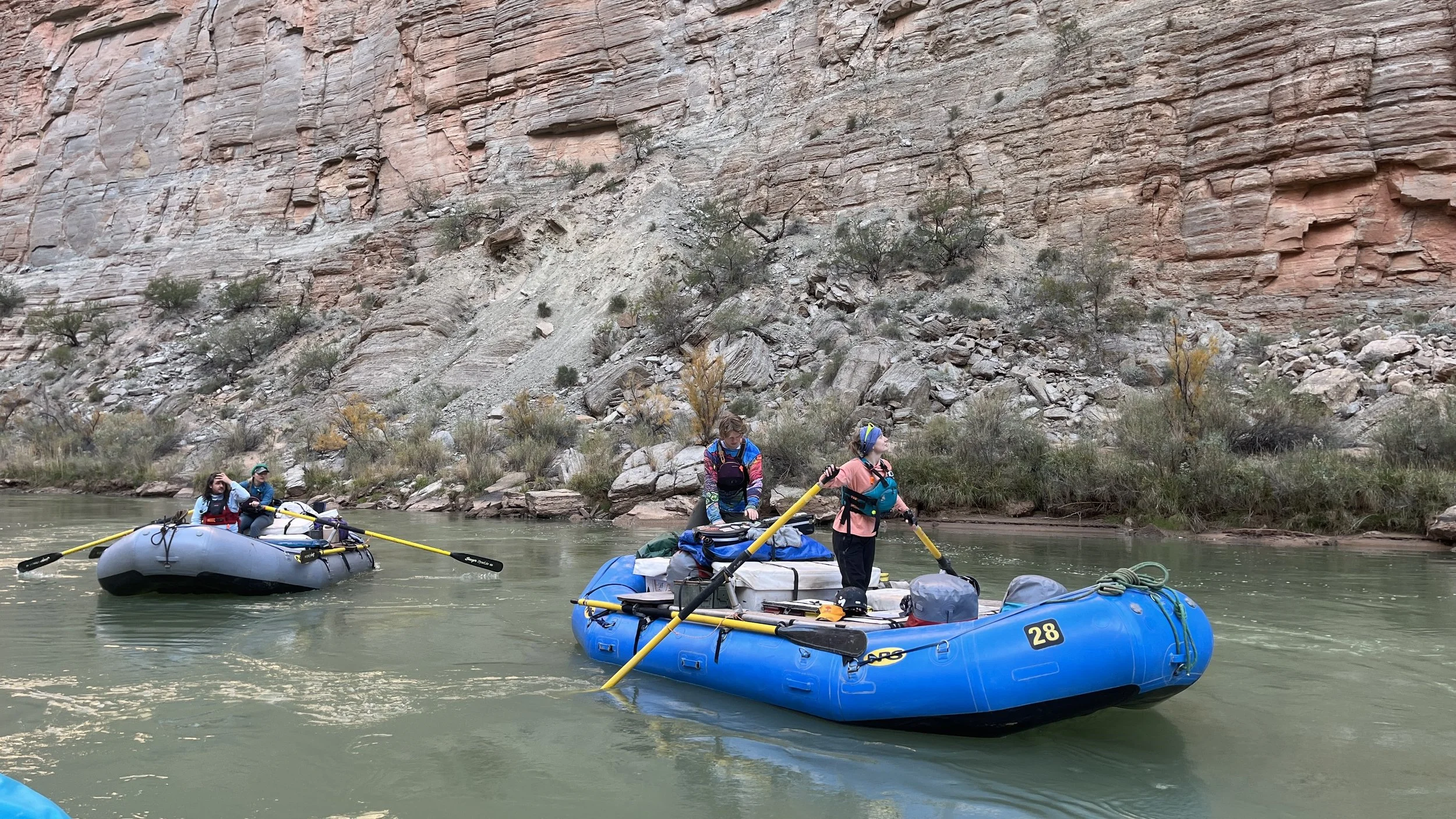
This winter I had the privilege of rowing a private rafting trip through the Grand Canyon. We were self-supported, human-powered, and fully responsible for our decisions. We launched in late November and came out in December. Twenty-five days of short daylight and cold mornings. A winter river trip doesn’t let you fake cohesion or optimism—it strips everything down to behavior, judgment, and how people show up when they’re tired and wet.
In the Grand Canyon, consequences are not theoretical. If your line is off and a boat tips, there is no stop and reset. You chase gear. You manage cold swimmers. You deal with the downstream effects for days. That reality creates important conversations. Preparation isn’t about eliminating risk. It’s about creating capacity to respond, to care for others, and to make good decisions under stress.
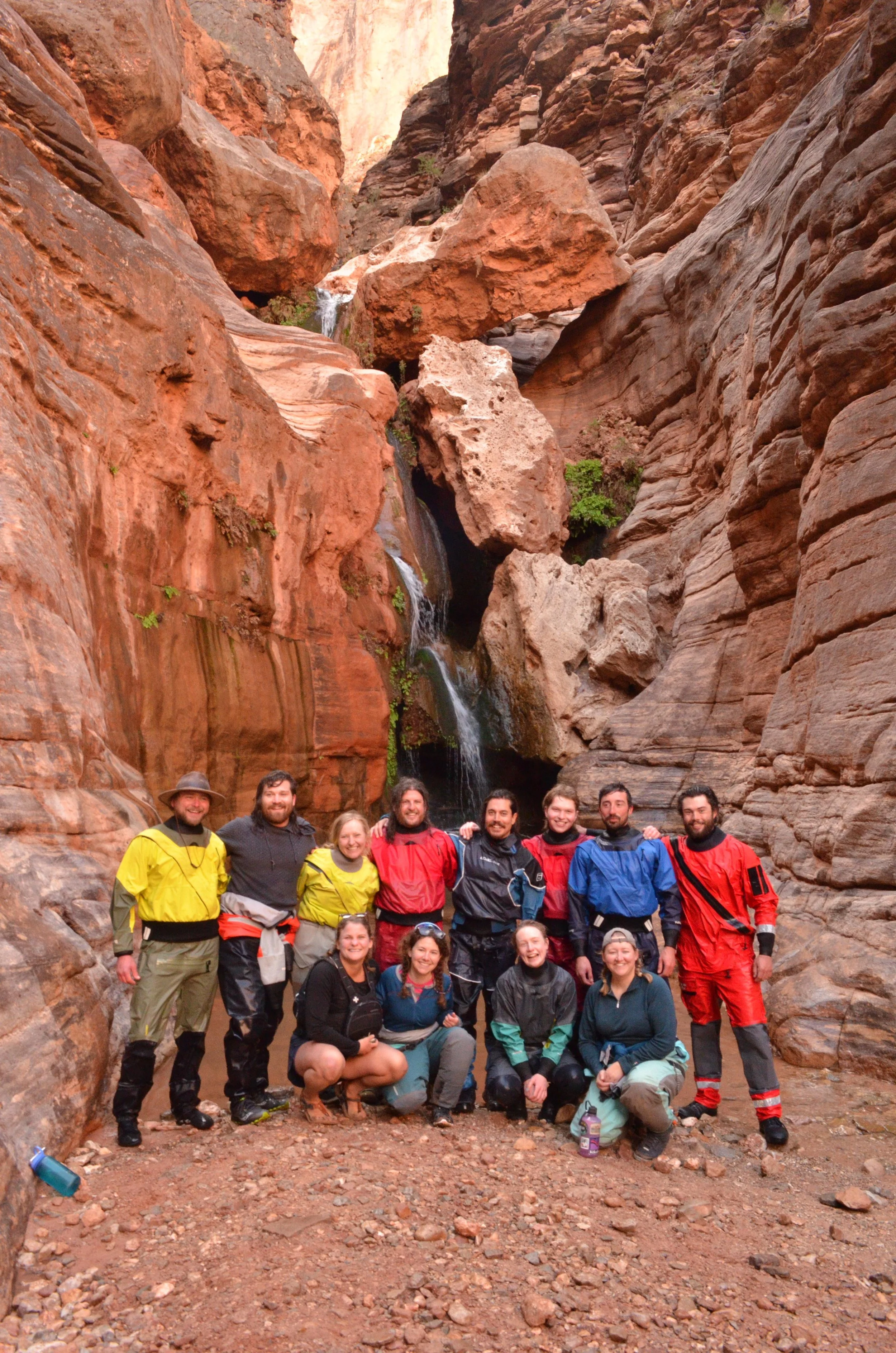
The moments that built trust on our trip were not clean lines through rapids.
They were small, intentional acts—checking in, admitting uncertainty, choosing patience over speed. Leadership is not performative, it’s relational. Over time, we became a functioning system under pressure.
I got to celebrate my 21st birthday on the river. At breakfast, I asked my new friends for gifts, specifically, a piece of advice that they have collected throughout their journey of growth as a human.
“Keep the passion and intention at the forefront.”
“You can lose it all and get it back.”
“Always assume everyone is trying their best.”
Those aren’t just slogans. They’re survival strategies for long trips, navigating the scary world of adulting, and for building relationships.
Having lived in Arizona and holding the area near and dear to my heart, I knew some about the river running of the place. At times in my life, it seemed like a different universe to the way that I could recreate in natural spaces. Bigger, harder. Something other people did, guides, adults with confidence and experience that I couldn’t imagine having.
The Grand Canyon is a most magical thing
But, I found myself at 16 on the Lower Salmon River, full of curiosity, fear, and excitement—learning how to read the river, read myself, and step into responsibility. The skills I began to build on that trip led me through college applications and helped me find a sense of place in a loud world. They brought me here, to wandering through blue pools at Havasu, watching condors soar above canyon walls, and feeling my strength as I work with the river to get where I want to go.
I encourage you to read about Glen Canyon Dam and the destruction it has caused on the Colorado River—a reminder that humans shape even the most enduring environments. It is vital that we are advocates for the natural spaces in which we recreate.
If you’d like a more uplifting story, read about the successful reintroduction of the California Condors! We were lucky to see two pairs of condors on our trip, an encouragement and testament to the resilience of ecosystems when humans support, rather than disrupt their natural processes.
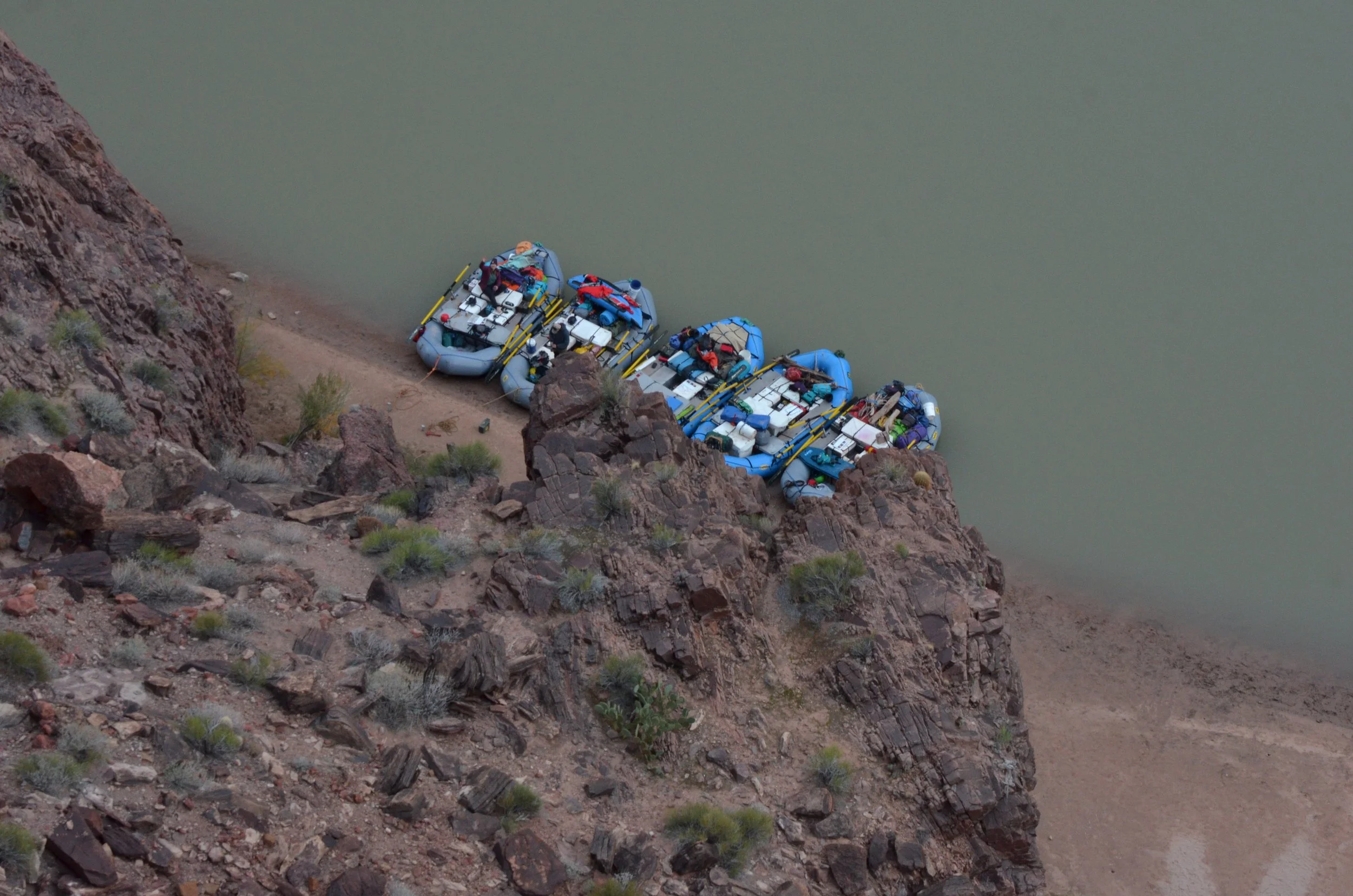
Colorado River, 2025
Photos: Claudio Guevara